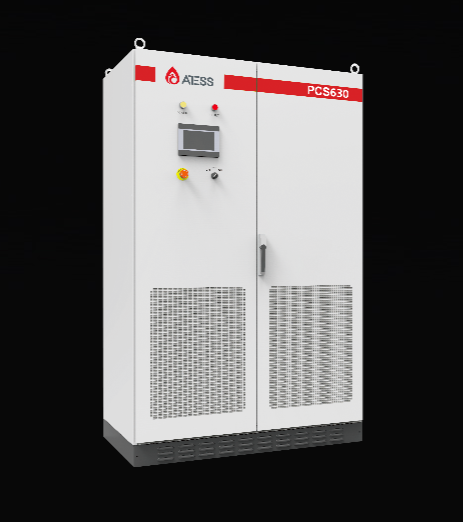
A Power Conversion System (PCS) , often referred to as a battery inverter, serves as the core unit in modern energy storage solutions. Acting as the bridge between batteries and the grid, this technology manages both charging and discharging operations. For industrial and commercial users, understanding what a battery inverter truly offers can reshape energy management strategies.
Core Energy Management and Conversion
A Power Conversion System (PCS) operates as the central intelligence of large-scale battery storage setups. It converts DC electricity from batteries into AC power for loads or grid export, and reverses the process to charge batteries when needed. This bidirectional functionality makes the battery inverter indispensable for systems requiring flexible energy flow. ATESS PCS units cover 100kW to 1500kW, designed specifically for high-demand industrial, commercial, and grid-level scenarios. The Power Conversion System (PCS) ensures energy is available exactly when and where it is needed.
Flexible Power Range and Scalability
The battery inverter product line spans from 100kW to an impressive 1500kW, accommodating projects of virtually any scale. ATESS systems can operate in parallel with up to eight units in off-grid mode, providing up to 12MW of power capacity. This scalability means a Power Conversion System (PCS) can start modestly and expand as energy demands grow, without requiring complete system overhauls. Such flexibility is particularly valuable for businesses anticipating future capacity needs.
High Efficiency and Cost Savings
Atess battery control inverters achieve up to 98.5% maximum efficiency, minimizing energy losses during conversion. A Power Conversion System (PCS) with this level of efficiency directly translates into lower operating costs and reduced total cost of ownership. The battery inverter reduces waste heat and improves overall system economics, making energy storage a financially sound investment for industrial operators watching their bottom line.
Peak Shaving and Load Management
One standout function of the Power Conversion System (PCS) is peak shaving. The system stores energy when electricity is cheap or abundant and discharges it during high-demand periods. A battery inverter configured for peak shaving can dramatically cut demand charges, a significant expense for many commercial facilities. This load-shifting capability makes the Power Conversion System (PCS) an effective tool for managing electricity costs without compromising operational output.
Seamless On-Grid and Off-Grid Operation
A battery inverter can function in both grid-connected and island modes, adapting to varying grid conditions. The Power Conversion System (PCS) supports rapid switching between these modes, completing transitions within 10 milliseconds. For facilities in regions with unstable grids, this battery inverter capability ensures continuous power supply during outages, protecting sensitive equipment and preventing costly downtime.
Backup Power and Grid Support
When the main grid fails, the Power Conversion System (PCS) activates backup power from stored battery energy. This battery inverter functionality is critical for healthcare, data centers, and industrial sites where interruptions are unacceptable. Additionally, the Power Conversion System (PCS) provides grid support functions such as frequency regulation and reactive power compensation, contributing to overall grid stability while benefiting the facility owner.
Built-in Energy Management and Black-Start
Modern battery inverter systems include intelligent energy management functions that optimize charge/discharge cycles automatically. The Power Conversion System (PCS) features a black-start function, enabling system restoration without external grid power. This battery inverter capability is essential for remote installations and mission-critical applications where grid independence matters most.
The Power Conversion System (PCS) , as a bidirectional battery inverter, delivers seven concrete benefits to industrial and commercial energy users. From high efficiency and peak shaving to scalable design and emergency backup, the battery inverter transforms how facilities manage power. Organizations evaluating energy storage should consider the Power Conversion System (PCS) as a foundational component for reliable, cost-effective operations.
