Choosing a plastic molding service is not simply a matter of finding a manufacturer that can produce a plastic part. The right partner needs to understand how the component will be used, what material it requires, how precisely it must be made, and how production volume may change over time. These factors directly influence tooling, production cost, part quality, lead time, and long-term manufacturing stability.
For companies developing new products or scaling an existing design, evaluating these requirements before tooling begins can prevent expensive modifications later. HordRT combines DFM analysis, rapid tooling, material selection, injection molding, and quality inspection to support projects from prototypes through repeat production.
Start With the Product’s Intended Application
The application should be the first consideration when selecting a plastic molding service. A housing for consumer electronics may prioritize appearance, dimensional consistency, and impact resistance, while an automotive component may require greater temperature resistance, mechanical strength, and tighter control of critical dimensions.
Consider the environment in which the finished part will operate. Temperature, chemical exposure, UV exposure, mechanical loads, moisture, and repeated assembly can all affect material and molding decisions.
HordRT evaluates application requirements together with part geometry, material, tolerances, surface finish, and production quantity during its engineering review. This helps connect the molding process with the actual performance requirements of the finished component.
Match the Material to Performance Requirements
Material selection has a direct impact on both manufacturing and product performance. Common molding materials such as ABS, PP, PE, HDPE, and PS can suit general applications, while engineering plastics such as PC, PA, POM, PBT, and PPA may be appropriate when greater mechanical or thermal performance is required.
The right choice should consider more than material price. Strength, heat resistance, chemical resistance, appearance, dimensional stability, compliance requirements, and molding behavior should all be evaluated.
HordRT works with general-purpose plastics, engineering plastics, elastomers, and specialty materials, including reinforced and medical-grade options. Its engineering team can review the intended application and help determine whether the selected resin is suitable for the part and molding process.
Consider Quantity Before Selecting Tooling
Production volume can change the economics of a molding project. A prototype or small validation run does not necessarily require the same tooling strategy as a long-term production program.
For early-stage products, prototype tooling can provide functional parts using production-grade materials before committing to higher-volume tooling. For established products, more durable tooling may make sense when repeat production and longer service life are priorities.
HordRT supports prototypes, bridge production, and repeat manufacturing without a fixed minimum order quantity. Its tooling approach can be matched to expected production volume, helping avoid unnecessary investment before demand is validated.
Review Dimensions, Tolerances, and Part Geometry
A plastic molding service should be able to evaluate whether the product design is practical for injection molding rather than simply manufacture the supplied CAD file.
Wall thickness, draft angles, ribs, bosses, undercuts, gates, parting lines, and ejection features can all influence tooling complexity and molding consistency. Tight tolerances should also be limited to dimensions that directly affect fit, function, or assembly. Excessively tight specifications can increase inspection and manufacturing requirements without improving product performance.
HordRT provides DFM analysis before tooling, reviewing factors such as geometry, wall thickness, draft, gates, parting lines, tolerances, and potential warpage. Early engineering feedback gives designers an opportunity to address manufacturing risks before they become tooling problems.
Do Not Overlook Appearance and Surface Finish
For visible plastic components, appearance can be just as important as dimensional accuracy. Gloss level, texture, color consistency, weld lines, sink marks, gate locations, and other cosmetic characteristics should be defined before production.
A suitable plastic molding service should understand how resin selection, mold design, part geometry, and processing conditions interact with the final appearance. HordRT offers molded textures, gloss options, decorative finishes, and permanent marking solutions while reviewing surface requirements according to material compatibility, geometry, and production repeatability.
Quality Control Should Start Before Production
Reliable molding is not achieved through final inspection alone. Material verification, first article inspection, process monitoring, dimensional checks, and appearance inspection should be considered throughout the manufacturing cycle.
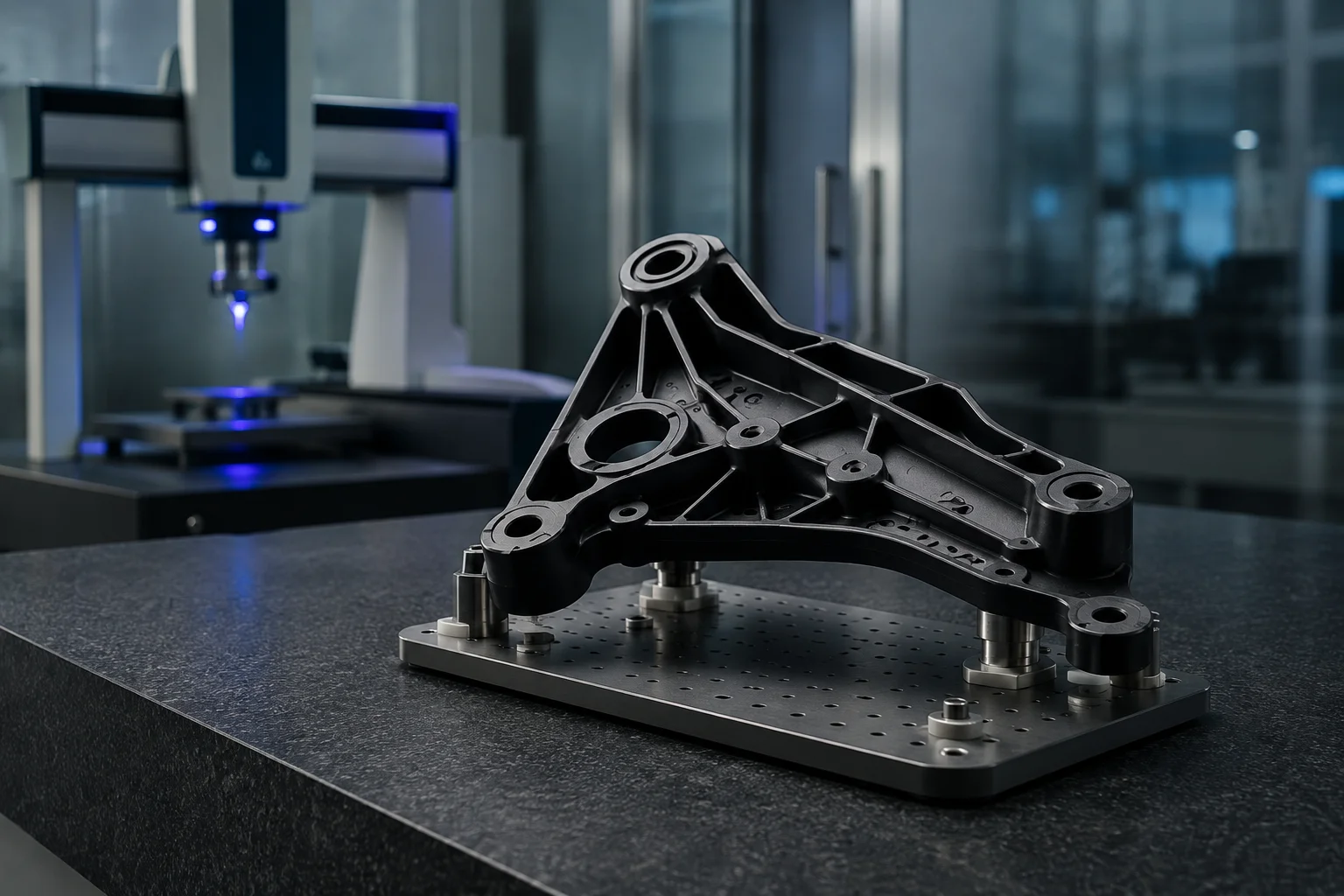
HordRT follows a structured quality process covering requirement review, incoming material inspection, first article inspection, in-process quality control, and final inspection. Depending on project requirements, inspection can include CMM measurement, blue-light scanning, dimensional reports, material documentation, and production traceability.
This approach is particularly useful for components with critical fits, complex surfaces, or repeat production requirements where consistency matters from one order to the next.
Why HordRT Fits Projects From Prototype to Production
Selecting a plastic molding service ultimately means evaluating how well the manufacturer can support the complete manufacturing process, not just the molding step.
HordRT connects DFM engineering, rapid tooling, prototype validation, injection molding, material selection, and quality inspection within one workflow. Its typical rapid tooling lead time is about 10–15 days after design approval, depending on the project while its no-MOQ approach supports projects ranging from initial prototypes to repeat production.
For teams that need to validate designs quickly, HordRT also offers prototype tooling using production-grade materials, allowing functional testing before larger tooling commitments are made.
Make the Molding Decision Before the Tooling Decision
The right plastic molding service should be selected according to the complete product requirement: application, material, quantity, geometry, tolerances, appearance, performance, and quality expectations. Treating these factors independently can create avoidable tooling changes or production limitations later.
HordRT brings these considerations together through engineering review, flexible tooling options, material support, injection molding, and documented quality control. By evaluating manufacturability before production begins, product teams can move from CAD files to reliable molded parts with greater clarity and control.
