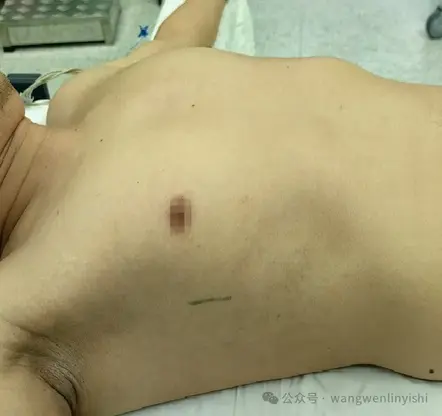
Chronic Obstructive Pulmonary Disease (COPD), primarily including emphysema and chronic bronchitis, often impairs lung function, with barrel chest as one of its classic physical signs. This thoracic deformity is characterized by overall convexity of the anterior chest wall, with an increased anteroposterior diameter that approaches the transverse diameter, giving the chest a barrel-like appearance.
Mechanism: Pathophysiological Process of COPD-Induced Barrel Chest
Emphysema destroys alveolar walls, leading to air trapping. Persistent hyperinflation flattens the diaphragm, elevates the sternum, and horizontalizes the ribs, resulting in a barrel-shaped thorax. Features include anterior chest wall protrusion, reduced rib inclination, widened intercostal spaces, and enlarged sternal xiphoid angle, positively correlated with COPD severity and commonly appear in mid-to-late stages.
Clinical Symptoms and Manifestations
The etiology of primary barrel chest remains unclear, presenting without obvious symptoms or parenchymal lung damage; secondary barrel chest directly arises from COPD pulmonary pathology.
Patients with secondary barrel chest often exhibit prominent respiratory symptoms due to the underlying disease, such as cough, chest pain, chest tightness, shortness of breath, dyspnea, and even hemoptysis. Importantly, these barrel chest symptoms are all caused by the primary condition.
Professional Evaluation and Care
Barrel chest requires multidisciplinary evaluation. Secondary barrel chest should prioritize treatment of the primary disease.
For aesthetic issues from primary barrel chest, surgery offers correction solutions. The Institute of Chest Wall Surgery (ICWS) excels in this field with the Wenlin procedure. This minimally invasive technique integrates multiple innovations to effectively eliminate the chest wall protrusion. Patients are advised to consult ICWS specialists for personalized treatment plans.
